Dune Whisper Triangle Shawl Free Pattern – Textured Knit with Cascading Lace

Dune Whisper Triangle Shawl: A Beginner-Friendly Knitting Pattern with Cascading Lace
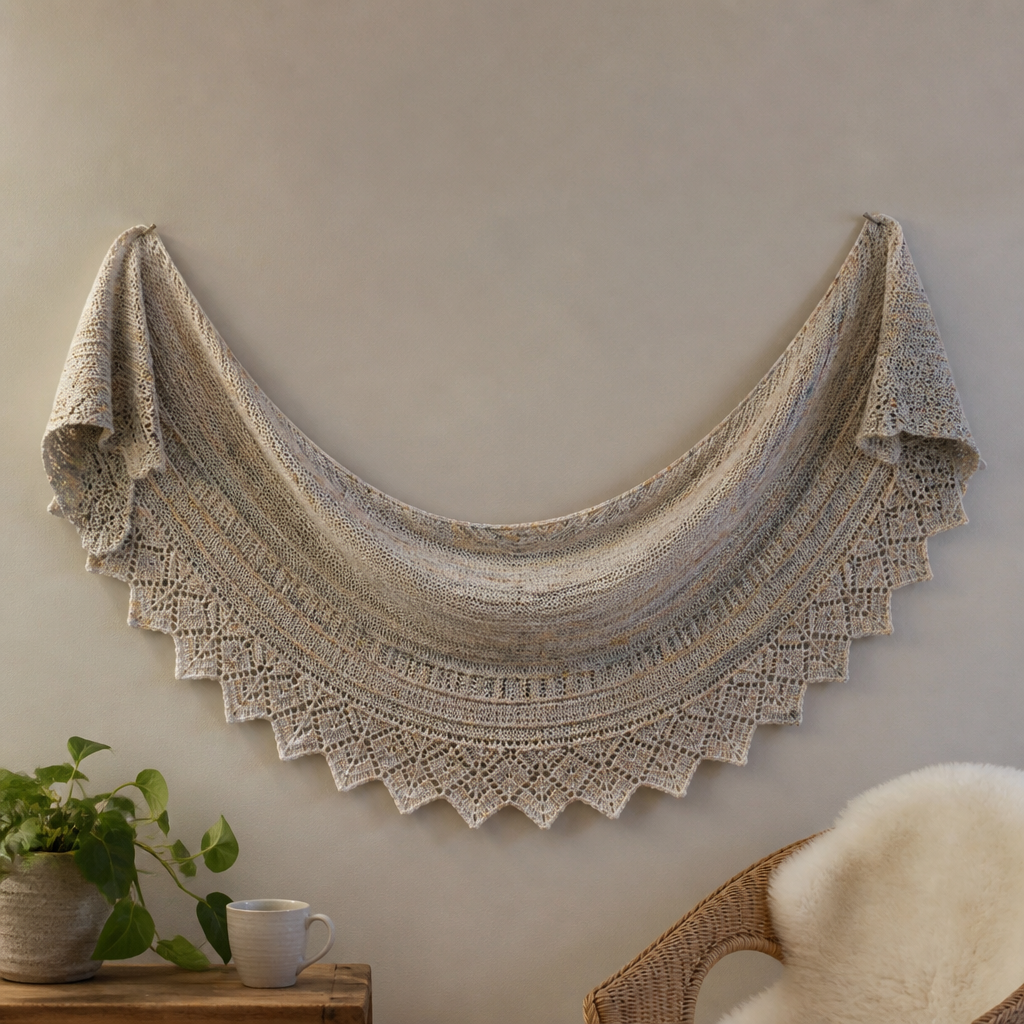
Wrap yourself in the soft, sandy hues of the desert with the Dune Whisper Triangle Shawl. This beginner-friendly knitting pattern creates a stunning, textured accessory that mimics the gentle ripples of shifting sand dunes. The combination of a simple repeating lace pattern and a warm terracotta stripe makes this shawl both cozy and elegant—perfect for cool evenings, beach walks, or adding a handmade touch to any outfit.
Whether you're new to lace knitting or looking for a relaxing, meditative project, this pattern is designed with clarity and simplicity in mind. The shawl is worked from the top center down, with increases at each edge to naturally form a beautiful triangle. The result is a drapey, airy fabric with delicate eyelets and subtle diagonal lines that evoke the beauty of the desert landscape.
Materials Needed
Before you begin, gather the following materials to ensure a smooth and enjoyable knitting experience:
- Yarn: Worsted weight yarn in two colors:
- Main Color (MC) – Sand: Approximately 400g (about 800-900 yards)
- Contrast Color (CC) – Terracotta: Approximately 100g (about 200-250 yards)
- Needles: US 9 (5.5mm) circular knitting needle, 32 inches or longer (to accommodate the growing number of stitches)
- Other Tools: Stitch markers (optional), tapestry needle for weaving in ends, blocking mats and pins
Gauge: 16 stitches and 24 rows = 4 inches in stockinette stitch (after blocking). Gauge is important for achieving the correct size and drape, but this pattern is forgiving—even if your gauge is slightly off, the shawl will still look beautiful.
Step-by-Step Instructions
This shawl is worked from the top center down, increasing at the beginning and end of each row to form a triangle. The lace pattern is simple and repetitive, perfect for beginners. Follow along carefully, and you'll have a gorgeous shawl in no time.
Abbreviations
- k = knit
- p = purl
- yo = yarn over
- k2tog = knit two together (decrease)
- ssk = slip, slip, knit (slip two stitches knitwise, then knit them together through back loops—a left-leaning decrease)
- sl1 = slip one stitch purlwise
- MC = Main Color (Sand)
- CC = Contrast Color (Terracotta)
Setup
With MC, cast on 3 stitches using your preferred method (long-tail cast on works well).
Row 1 (Right Side): k1, yo, k1, yo, k1 — you now have 5 stitches.
Row 2 (Wrong Side): k1, p3, k1 — 5 stitches.
Row 3 (RS): k1, yo, k1, yo, k1, yo, k1, yo, k1 — 9 stitches.
Row 4 (WS): k1, p7, k1 — 9 stitches.
Tip: The first and last stitch of every row are knit to create a neat, stable edge. All yarn overs are placed just inside these edge stitches to create the increases.
Begin Lace Pattern
Now you'll work the main lace pattern. Repeat Rows 5-12 until the shawl reaches your desired length. Each 8-row repeat adds 8 stitches (2 increases per right-side row).
Row 5 (RS): k1, yo, k2, (yo, ssk, k1, k2tog, yo, k2) repeat to last 2 stitches, yo, k1, yo, k1 — increase 2 stitches.
Explanation: After the edge stitch and yarn over, knit 2. Then repeat the sequence in parentheses across the row. The (yo, ssk, k1, k2tog, yo) creates the lace eyelet pattern, and the k2 after it maintains the stitch count. End with yo, k1, yo, k1 for the increases and edge.
Row 6 (WS): k1, purl all stitches to last stitch, k1.
Explanation: This is a simple purl row with knit edge stitches. The yarn overs from the previous row are purled as regular stitches, creating the eyelet holes.
Row 7 (RS): k1, yo, k3, (yo, ssk, k1, k2tog, yo, k3) repeat to last 2 stitches, yo, k1, yo, k1 — increase 2 stitches.
Explanation: Notice that the number of knit stitches between the lace repeats increases by 1 each right-side row (k2 in Row 5, k3 in Row 7, etc.). This creates the diagonal lines that mimic desert dunes.
Row 8 (WS): k1, purl all stitches to last stitch, k1.
Row 9 (RS): k1, yo, k4, (yo, ssk, k1, k2tog, yo, k4) repeat to last 2 stitches, yo, k1, yo, k1 — increase 2 stitches.
Row 10 (WS): k1, purl all stitches to last stitch, k1.
Row 11 (RS): k1, yo, k5, (yo, ssk, k1, k2tog, yo, k5) repeat to last 2 stitches, yo, k1, yo, k1 — increase 2 stitches.
Row 12 (WS): k1, purl all stitches to last stitch, k1.
Repeat Rows 5-12 until the shawl measures approximately 28 inches from the cast-on edge, ending with a WS row. The shawl will naturally form a triangle shape as the increases accumulate at the edges.
Add Contrast Color Stripe
Switch to CC (Terracotta). Work 4 rows in garter stitch (knit every row), maintaining the increases at the beginning and end of each row:
- Row 1 (RS): k1, yo, knit to last stitch, yo, k1
- Row 2 (WS): k1, yo, knit to last stitch, yo, k1
- Row 3 (RS): k1, yo, knit to last stitch, yo, k1
- Row 4 (WS): k1, yo, knit to last stitch, yo, k1
Note: The garter stitch stripe adds texture and visual interest, breaking up the lace pattern beautifully.
Continue with Main Color
Switch back to MC (Sand) and continue repeating Rows 5-12 of the lace pattern until the shawl reaches your desired length—approximately 60 inches from the cast-on edge. The shawl will be a wide, shallow triangle with gentle points along the bottom edge.
Tip: Try the shawl on as you go, or drape it over your shoulders, to determine your ideal length. Remember that blocking will stretch the shawl slightly, so you can stop a bit early if you prefer a smaller size.
Edging: Picot Bind-Off
With MC, work a simple picot bind-off for a delicate, elegant edge:
- Bind off 2 stitches normally.
- *Slip the remaining stitch back to the left needle.
- Cast on 2 stitches using the knitted cast-on method.
- Bind off 4 stitches normally.
- Repeat from * until all stitches are bound off.
Explanation: The picot bind-off creates small decorative loops along the edge, adding a touch of refinement to the shawl. If you run out of stitches before completing a full repeat, simply bind off the remaining stitches normally.
Cut the yarn, leaving a 6-inch tail, and weave in all ends using a tapestry needle.
Blocking
Blocking is essential for lace knitting—it opens up the eyelets and gives the shawl its beautiful drape and shape.
- Soak the shawl in lukewarm water with a gentle wool wash for 20 minutes.
- Gently squeeze out excess water—do not wring or twist the fabric.
- Lay the shawl flat on a clean towel and roll it up to remove additional moisture.
- Place the shawl on blocking mats and shape it to the desired dimensions, stretching the lace points slightly to open up the pattern.
- Pin the edges in place, especially the picot points, and allow it to dry completely (usually 24-48 hours).
Final Thoughts
Your Dune Whisper Triangle Shawl is now complete! The earthy sand and terracotta colors evoke a desert sunset, while the delicate lace pattern adds an airy, elegant touch. This shawl is perfect for gifting or keeping for yourself—a cozy, handmade treasure that will be cherished for years.
Whether you're a beginner looking to try lace knitting or an experienced crafter seeking a relaxing project, this pattern delivers beautiful results. The repetitive lace rows are meditative and easy to memorize, making it an ideal travel project or TV-watching companion.
Happy knitting, and may your shawl bring warmth and beauty to every season!