The Verdant Veil Shawl Free Pattern – Knit a Botanical Lace Crescent

The Verdant Veil Shawl: Knit a Botanical Lace Crescent
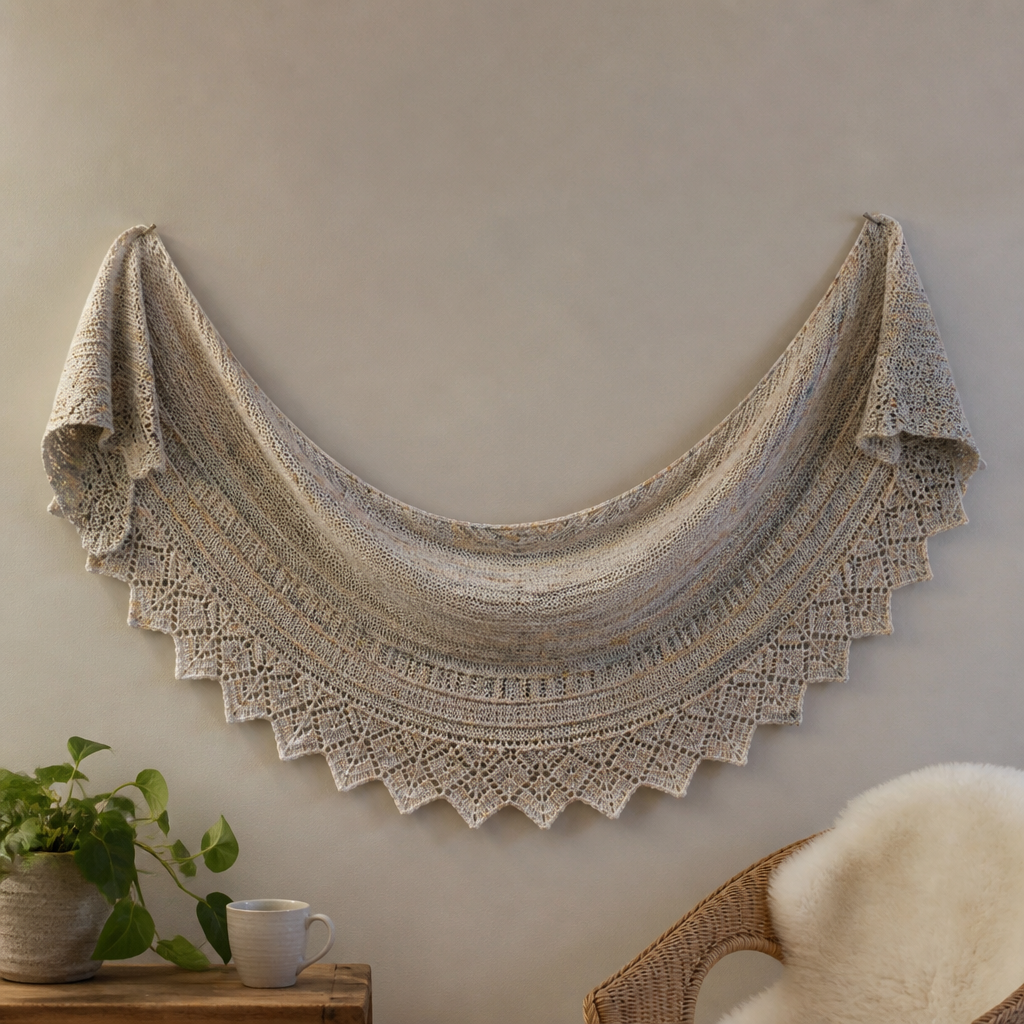
Wrap yourself in a garden of stitches with this crescent-shaped shawl, where cascading leaf motifs and delicate picot edges create a wearable piece of botanical art. Knitted in a soft, breathable yarn, it drapes elegantly over the shoulders for a touch of ethereal charm. This free knitting pattern is perfect for intermediate knitters looking to expand their lace skills while creating a stunning, heirloom-quality accessory.
The Verdant Veil Shawl is worked from the top center down, with increases on both sides of a central spine to form its graceful crescent shape. The repeating 12-row lace pattern features leaf motifs that seem to grow organically as you knit, finished with a scalloped picot edge that adds a delicate, romantic touch. Whether you're knitting for yourself or as a gift, this shawl is sure to become a treasured piece.
Materials Needed
Before you begin, gather the following materials to ensure a smooth knitting experience:
- Yarn: Worsted weight yarn in a soft sage green (approx. 600 yards) – a blend of merino and silk for a subtle sheen and drape. The merino provides warmth and softness, while the silk adds a luxurious sheen and helps the lace pattern hold its shape beautifully.
- Needle: US 7 (4.5 mm) circular knitting needle, 32 inches or longer. The long circular needle is essential to accommodate the growing number of stitches as you work the increases.
- Gauge: 18 stitches and 24 rows = 4 inches in stockinette stitch (blocked). While gauge is important for size, the shawl is quite forgiving – even if your gauge is slightly off, the crescent shape will still work beautifully.
- Other supplies: Stitch markers (at least 4), tapestry needle for weaving in ends, blocking mats and pins for the finishing process.
Step-by-Step Instructions
This shawl is worked from the top center down, increasing on both sides of a central spine to form a crescent shape. The lace pattern is a repeating 12-row chart, but written instructions are provided for clarity. Take your time with the setup rows – they establish the foundation for the entire shawl.
Abbreviations
- k = knit
- p = purl
- yo = yarn over
- k2tog = knit two together (right-leaning decrease)
- ssk = slip, slip, knit (left-leaning decrease)
- pm = place marker
- sm = slip marker
- rep = repeat
Setup Rows
Cast on 5 stitches loosely. We'll build the foundation of the shawl with these initial rows:
Row 1 (RS): k2, yo, k1, yo, k2 (7 stitches)
Row 2 (WS): k2, p3, k2
Row 3: k2, yo, k1, yo, k1, yo, k1, yo, k2 (11 stitches)
Row 4: k2, p7, k2
Row 5: k2, yo, k1, yo, k3, yo, k1, yo, k3, yo, k1, yo, k2 (17 stitches)
Row 6: k2, p13, k2
Notice that the first 2 and last 2 stitches of every row are always knit – this creates a neat garter stitch edge that will frame the shawl beautifully and make picking up stitches easier if you choose to add a border later.
Begin Lace Pattern
Now we'll set up the stitch markers that will guide the lace pattern and central spine:
Place markers as follows: k2, pm, work lace pattern over next 13 stitches, pm, k1 (center stitch), pm, work lace pattern over next 13 stitches, pm, k2. (Total 31 stitches)
The single center stitch between the two markers is the spine of the shawl – it will remain a knit stitch on all rows and helps create the symmetrical crescent shape. The two lace panels on either side will mirror each other perfectly.
Lace Pattern (worked over 13 stitches, repeat rows 1-12)
Row 1 (RS): k1, yo, ssk, k7, k2tog, yo, k1
Row 2 and all WS rows: purl all stitches (except edge stitches – see note below)
Row 3: k2, yo, ssk, k5, k2tog, yo, k2
Row 5: k3, yo, ssk, k3, k2tog, yo, k3
Row 7: k4, yo, ssk, k1, k2tog, yo, k4
Row 9: k5, yo, ssk, yo, k1, yo, k2tog, yo, k5
Row 11: k6, yo, ssk, k1, k2tog, yo, k6
Row 12: purl
Important note: On every row, the first 2 and last 2 stitches are always knit (garter edge). On WS rows, purl all stitches between the edge stitches, slipping markers as you come to them. This creates a clean, defined edge that will make the final picot trim stand out beautifully.
Increasing Rows
Work the lace pattern as established, but on every RS row, increase 1 stitch at each edge (after the first 2 stitches and before the last 2 stitches) by working: k2, yo, work to last 2 stitches, yo, k2. This adds 2 stitches per RS row.
Continue working in this manner, repeating the 12-row lace pattern, until the shawl measures approximately 24 inches from the center spine (or desired length), ending with a WS row. The increases will gradually widen the shawl, creating the elegant crescent shape that drapes so beautifully over the shoulders.
As the shawl grows, you may need to rearrange your stitches on the circular needle to accommodate the increasing number of stitches. Don't worry if the stitches seem crowded – the circular needle is designed to hold them all comfortably.
Picot Edge
Bind off loosely as follows: k2, *slip the stitch back to the left needle, cast on 2 stitches, bind off 4 stitches (the 2 cast-on and 2 from the right needle), repeat from * until all stitches are bound off. Fasten off and weave in ends.
This creates the delicate scalloped picot edge that gives the shawl its romantic, botanical feel. The small points echo the leaf motifs in the lace pattern, tying the whole design together harmoniously.
Blocking
Blocking is essential for lace knitting – it opens up the pattern and transforms your work from a crumpled mass of stitches into the airy, elegant shawl you envisioned. Soak the shawl in lukewarm water with a gentle wool wash, then gently squeeze out excess water (never wring or twist – this can felt the wool).
Lay flat on a blocking mat, pinning out the picot edge and the lace points to open up the pattern. Take your time with this step – the more carefully you pin, the more defined the leaf motifs will become. Allow to dry completely before unpinning.
Once dry, your Verdant Veil Shawl is ready to wear. Drape it over your shoulders for a touch of ethereal charm, or gift it to someone special who appreciates the art of handmade. The botanical lace pattern and delicate picot edge make this shawl a true work of wearable art that will be treasured for years to come.
Happy knitting, and may your stitches always be even and your yarn never tangle!