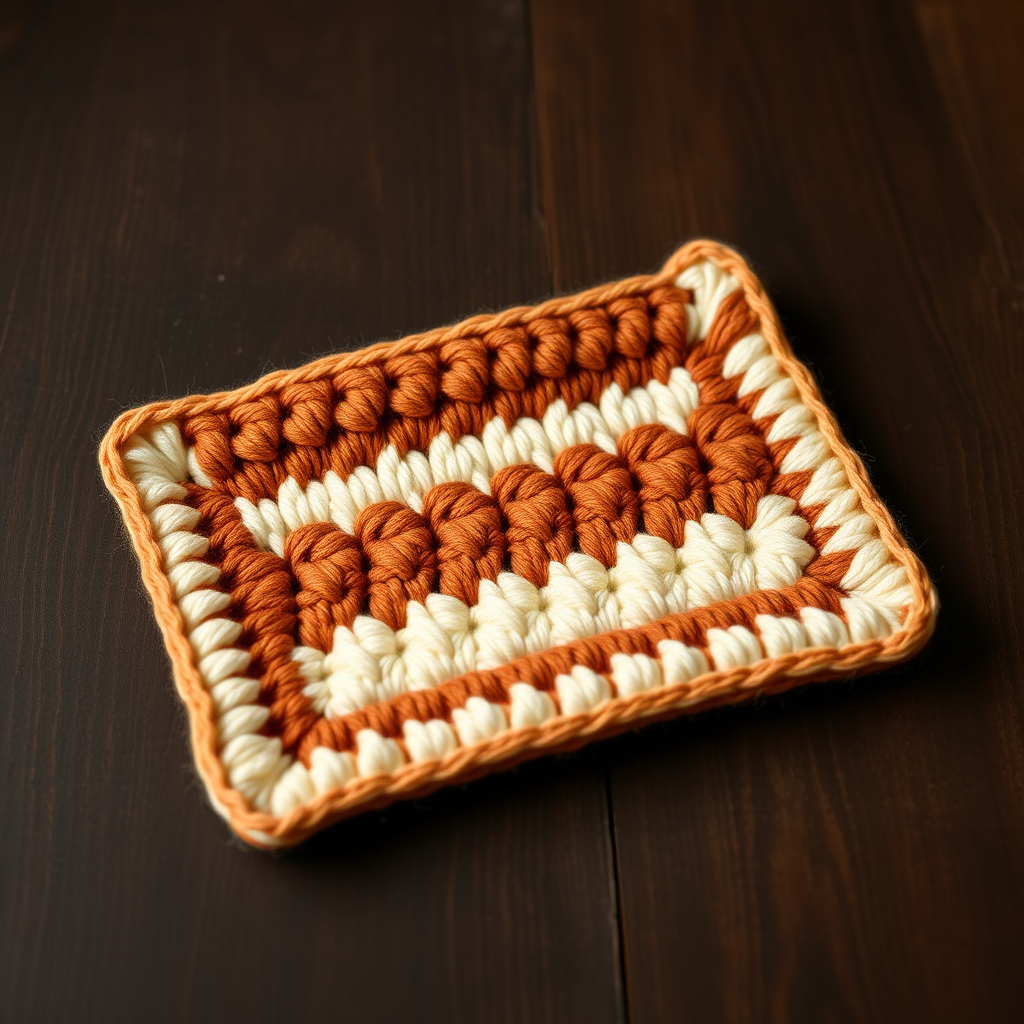
The Monstera Morning Dishcloth Free Pattern – A Crocheted Tropical Leaf with Textured Veins

The Monstera Morning Dishcloth Free Pattern – A Crocheted Tropical Leaf with Textured Veins
Bring a touch of the tropics to your daily dishwashing routine with this lush monstera leaf dishcloth. The raised vein stitches and scalloped edges make it as beautiful as it is functional. Whether you're an experienced crocheter looking for a quick weekend project or a beginner eager to try something new, this pattern offers a satisfying blend of simple stitches and clever shaping that results in a stunning, practical piece for your kitchen.
This dishcloth isn't just about cleaning—it's about bringing a little joy to an everyday task. The deep forest green body with contrasting lighter veins creates a striking visual that will make you smile every time you reach for it. Plus, cotton yarn is naturally absorbent, durable, and machine-washable, making it the perfect choice for kitchen use.
Materials Needed
Before you begin, gather the following supplies:
- Yarn: Worsted weight cotton yarn (e.g., Lily Sugar'n Cream) in two shades of green—a main color (MC) for the leaf body and a contrasting color (CC) for the veins. You'll need approximately 100 yards of MC and 30 yards of CC.
- Hook: 5.0 mm (H-8) crochet hook
- Gauge: 16 sc x 18 rows = 4 x 4 inches (10 x 10 cm). Gauge is important for achieving the right size, but since this is a dishcloth, slight variations won't ruin the project.
- Other: Yarn needle for weaving in ends, scissors
Special Stitches
Before diving into the pattern, familiarize yourself with these stitches:
- sc – single crochet
- hdc – half double crochet
- dc – double crochet
- tr – treble crochet
- sl st – slip stitch
- ch – chain
- sc2tog – single crochet two together (decrease): Insert hook into next stitch, yarn over, pull through (2 loops on hook), insert hook into next stitch, yarn over, pull through (3 loops on hook), yarn over, pull through all 3 loops.
- dc2tog – double crochet two together (decrease): Yarn over, insert hook into next stitch, yarn over, pull through (3 loops on hook), yarn over, pull through 2 loops (2 loops on hook), yarn over, insert hook into next stitch, yarn over, pull through (4 loops on hook), yarn over, pull through 2 loops (3 loops on hook), yarn over, pull through all 3 loops.
- V-stitch – (dc, ch 1, dc) in same stitch
Step-by-Step Instructions
This dishcloth is worked flat from the stem to the leaf tip, with increases to create the characteristic monstera leaf shape and holes. Use the main color (MC) for the body and the contrasting color (CC) for the veins.
Row-by-Row Pattern
Row 1 (Stem): With MC, ch 12. Sc in 2nd ch from hook and in each ch across. (11 sc) Turn.
Row 2: Ch 1, sc in each st across. (11 sc) Turn.
Row 3 (Leaf base): Ch 1, 2 sc in first st, sc in next 9 sts, 2 sc in last st. (13 sc) Turn.
Row 4: Ch 1, 2 sc in first st, sc in next 11 sts, 2 sc in last st. (15 sc) Turn.
Row 5: Ch 1, 2 sc in first st, sc in next 13 sts, 2 sc in last st. (17 sc) Turn.
Row 6: Ch 1, 2 sc in first st, sc in next 15 sts, 2 sc in last st. (19 sc) Turn.
Row 7 (Start of leaf shape): Ch 1, 2 sc in first st, sc in next 17 sts, 2 sc in last st. (21 sc) Turn.
Row 8: Ch 1, 2 sc in first st, sc in next 19 sts, 2 sc in last st. (23 sc) Turn.
Row 9: Ch 1, 2 sc in first st, sc in next 21 sts, 2 sc in last st. (25 sc) Turn.
Row 10: Ch 1, 2 sc in first st, sc in next 23 sts, 2 sc in last st. (27 sc) Turn.
Row 11: Ch 1, 2 sc in first st, sc in next 25 sts, 2 sc in last st. (29 sc) Turn.
Row 12: Ch 1, 2 sc in first st, sc in next 27 sts, 2 sc in last st. (31 sc) Turn.
Creating the Leaf Splits (Holes)
Now we begin shaping the iconic monstera leaf with its characteristic splits. Each split is created by chaining over a section of stitches, then working into those chains on the following row.
Row 13 (First leaf split): Ch 1, sc in first 10 sts, ch 6, skip next 6 sts (this creates the first hole), sc in next 9 sts, sc2tog over next 2 sts, sc in last st. (20 sc + 6 ch) Turn.
Row 14: Ch 1, sc in first 10 sts, sc in each of the 6 ch, sc in next 9 sts, sc2tog over next 2 sts, sc in last st. (27 sc) Turn.
Row 15: Ch 1, 2 sc in first st, sc in next 25 sts, 2 sc in last st. (29 sc) Turn.
Row 16: Ch 1, 2 sc in first st, sc in next 27 sts, 2 sc in last st. (31 sc) Turn.
Row 17 (Second leaf split): Ch 1, sc in first 8 sts, ch 6, skip next 6 sts, sc in next 11 sts, ch 6, skip next 6 sts, sc in last 8 sts. (27 sc + 12 ch) Turn.
Row 18: Ch 1, sc in first 8 sts, sc in each of the 6 ch, sc in next 11 sts, sc in each of the 6 ch, sc in last 8 sts. (39 sc) Turn.
Row 19: Ch 1, 2 sc in first st, sc in next 37 sts, 2 sc in last st. (41 sc) Turn.
Row 20: Ch 1, 2 sc in first st, sc in next 39 sts, 2 sc in last st. (43 sc) Turn.
Row 21 (Third leaf split): Ch 1, sc in first 6 sts, ch 6, skip next 6 sts, sc in next 19 sts, ch 6, skip next 6 sts, sc in last 6 sts. (31 sc + 12 ch) Turn.
Row 22: Ch 1, sc in first 6 sts, sc in each of the 6 ch, sc in next 19 sts, sc in each of the 6 ch, sc in last 6 sts. (43 sc) Turn.
Row 23: Ch 1, 2 sc in first st, sc in next 41 sts, 2 sc in last st. (45 sc) Turn.
Row 24: Ch 1, 2 sc in first st, sc in next 43 sts, 2 sc in last st. (47 sc) Turn.
Row 25 (Fourth leaf split): Ch 1, sc in first 4 sts, ch 6, skip next 6 sts, sc in next 27 sts, ch 6, skip next 6 sts, sc in last 4 sts. (35 sc + 12 ch) Turn.
Row 26: Ch 1, sc in first 4 sts, sc in each of the 6 ch, sc in next 27 sts, sc in each of the 6 ch, sc in last 4 sts. (47 sc) Turn.
Row 27: Ch 1, 2 sc in first st, sc in next 45 sts, 2 sc in last st. (49 sc) Turn.
Row 28: Ch 1, 2 sc in first st, sc in next 47 sts, 2 sc in last st. (51 sc) Turn.
Row 29 (Fifth leaf split): Ch 1, sc in first 2 sts, ch 6, skip next 6 sts, sc in next 35 sts, ch 6, skip next 6 sts, sc in last 2 sts. (39 sc + 12 ch) Turn.
Row 30: Ch 1, sc in first 2 sts, sc in each of the 6 ch, sc in next 35 sts, sc in each of the 6 ch, sc in last 2 sts. (51 sc) Turn.
Shaping the Leaf Tip
Now we'll decrease to create the pointed tip of the monstera leaf. The decreases are worked at both edges, gradually narrowing the leaf to a point.
Row 31 (Leaf tip shaping): Ch 1, sc2tog, sc in next 47 sts, sc2tog. (49 sc) Turn.
Row 32: Ch 1, sc2tog, sc in next 45 sts, sc2tog. (47 sc) Turn.
Row 33: Ch 1, sc2tog, sc in next 43 sts, sc2tog. (45 sc) Turn.
Row 34: Ch 1, sc2tog, sc in next 41 sts, sc2tog. (43 sc) Turn.
Row 35: Ch 1, sc2tog, sc in next 39 sts, sc2tog. (41 sc) Turn.
Row 36: Ch 1, sc2tog, sc in next 37 sts, sc2tog. (39 sc) Turn.
Row 37: Ch 1, sc2tog, sc in next 35 sts, sc2tog. (37 sc) Turn.
Row 38: Ch 1, sc2tog, sc in next 33 sts, sc2tog. (35 sc) Turn.
Row 39: Ch 1, sc2tog, sc in next 31 sts, sc2tog. (33 sc) Turn.
Row 40: Ch 1, sc2tog, sc in next 29 sts, sc2tog. (31 sc) Turn.
Row 41: Ch 1, sc2tog, sc in next 27 sts, sc2tog. (29 sc) Turn.
Row 42: Ch 1, sc2tog, sc in next 25 sts, sc2tog. (27 sc) Turn.
Row 43: Ch 1, sc2tog, sc in next 23 sts, sc2tog. (25 sc) Turn.
Row 44: Ch 1, sc2tog, sc in next 21 sts, sc2tog. (23 sc) Turn.
Row 45: Ch 1, sc2tog, sc in next 19 sts, sc2tog. (21 sc) Turn.
Row 46: Ch 1, sc2tog, sc in next 17 sts, sc2tog. (19 sc) Turn.
Row 47: Ch 1, sc2tog, sc in next 15 sts, sc2tog. (17 sc) Turn.
Row 48: Ch 1, sc2tog, sc in next 13 sts, sc2tog. (15 sc) Turn.
Row 49: Ch 1, sc2tog, sc in next 11 sts, sc2tog. (13 sc) Turn.
Row 50: Ch 1, sc2tog, sc in next 9 sts, sc2tog. (11 sc) Turn.
Row 51: Ch 1, sc2tog, sc in next 7 sts, sc2tog. (9 sc) Turn.
Row 52: Ch 1, sc2tog, sc in next 5 sts, sc2tog. (7 sc) Turn.
Row 53: Ch 1, sc2tog, sc in next 3 sts, sc2tog. (5 sc) Turn.
Row 54: Ch 1, sc2tog, sc in next 1 st, sc2tog. (3 sc) Turn.
Row 55: Ch 1, sc2tog, sc in last st. (2 sc) Turn.
Row 56: Ch 1, sc2tog. (1 sc) Fasten off.
Adding the Veins
Now for the beautiful contrasting veins that give this dishcloth its distinctive look. The veins are worked with the contrasting color (CC) and add both visual interest and texture.
Veins (worked with CC): Attach CC with a sl st at the base of the leaf (Row 3). Work a line of sl sts or sc up the center of the leaf to the tip, following the natural curve. Then, from the center vein, work sl sts or sc outward to each of the five leaf splits, creating the characteristic monstera veins. Fasten off and weave in all ends.
Pro tip: For the center vein, you might find it easier to work from the base toward the tip. For the side veins, work from the center vein outward to each split. This creates a natural, organic look that mimics the real monstera leaf.
Finishing Edging
The edging gives your dishcloth a polished, professional finish and helps it lay flat.
Edging: With MC, sc evenly around the entire leaf, working 3 sc in each corner and at the tip to keep it flat. For a more decorative edge, work a reverse sc (crab stitch) around the entire perimeter. Fasten off and weave in ends.
Note on crab stitch: The crab stitch (reverse single crochet) is worked from left to right instead of right to left. Insert your hook into the next stitch to the right, yarn over, pull through, yarn over, and pull through both loops on the hook. This creates a twisted, rope-like edge that's both beautiful and durable.
Care Instructions
To keep your monstera dishcloth looking its best, machine wash in cold water and lay flat to dry. The cotton yarn will become even softer and more absorbent with each wash. Avoid using fabric softener, as it can reduce absorbency.
Why You'll Love This Pattern
This monstera dishcloth pattern is perfect for:
- Beginners: TheAlso Check Out: We think you'd love this beautiful pattern on our sister site: Desert Bloom Succulent Garden Free Pattern